

A well-organized retirement plan begins with a clear overview of one's finances. Those who manage savings, reserves, and long-term savings goals in a structured manner can better understand their financial planning and identify early on where adjustments might be beneficial.
Digital financial planners and clear Excel templates can help document income, expenses, and savings in one central location. This gradually creates a transparent foundation for long-term financial planning and building financial reserves.
Long-term financial planning does not begin with complicated strategies, but with an overview, realistic savings goals and regular monitoring of one's own savings.
The first step is to clearly assess your current financial situation. This includes regular income, ongoing expenses, existing savings, and amounts that can be set aside monthly for long-term goals. A structured financial plan reveals how much financial leeway you actually have.
Subsequently, specific savings goals can be defined and categorized by time period or purpose. A digital budget planner or an Excel template allows for the regular documentation of savings amounts and makes it easier to track progress. This keeps retirement planning transparent and long-term financial planning comprehensible.
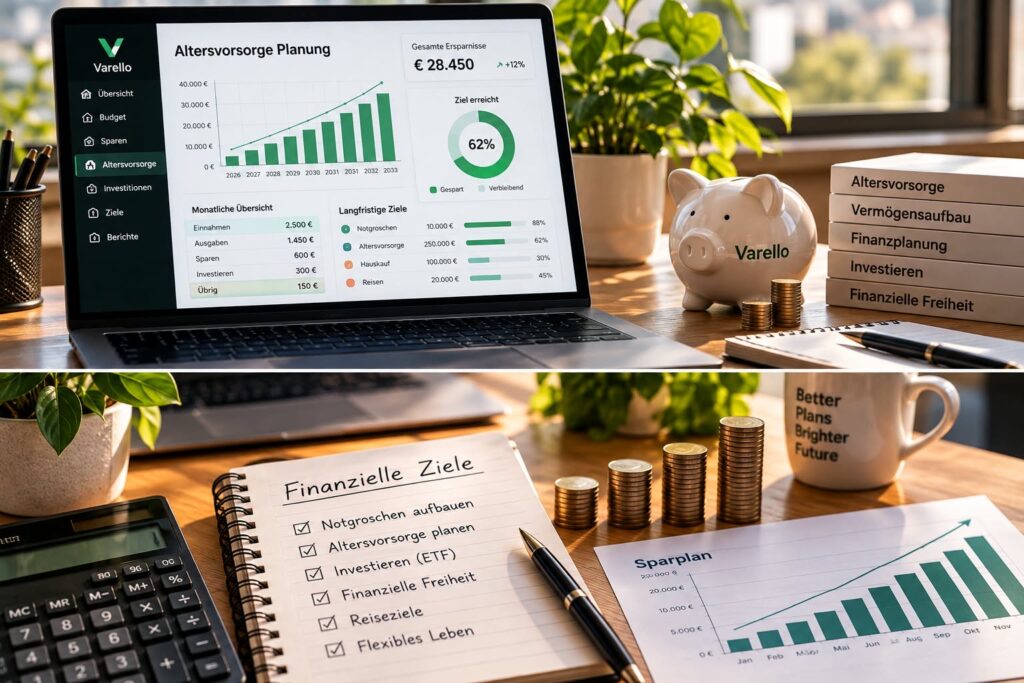

It's also important to regularly review your plan. Income, expenses, and personal goals can change over time. Therefore, a long-term financial plan should remain flexible and be adjusted as needed.
Digital tools can simplify this process by clearly displaying savings, reserves, and savings goals. However, the crucial factor is not the number of tools used, but a simple structure that can be maintained consistently. This ensures that financial progress remains transparent and understandable.
Conclusion with key points
A structured retirement plan is based primarily on clarity and consistency. Knowing your income and expenses, setting realistic savings goals, documenting your reserves, and regularly reviewing your plan creates a better foundation for long-term financial decisions.
Digital financial planners and Excel templates can help you organize important information centrally and track developments more easily. However, it's important to remember that financial goals and personal circumstances differ. The content of this article is for general information purposes only and does not constitute financial or investment advice.
Leave a Reply